The Withings Sleep Mat for AFib patients tracking nocturnal arrhythmia offers under-mattress ballistocardiography that flags irregular heart rhythms while you sleep, without asking the wearer to keep a wristband charged or tight. In 2026, the Withings Sleep Analyzer remains the most credible contact-free option for people with atrial fibrillation who want continuous nightly heart-rhythm screening, sleep apnea detection, and sleep-stage data. It is not a replacement for the Holter monitor or ECG patch a cardiologist may prescribe, but its irregular heart rhythm notification feature can help patients spot whether AFib episodes are clustering at night, correlate them with apnea events, and share readable trend reports with their electrophysiology team.
Why the Withings Sleep Mat is uniquely suited to nocturnal AFib monitoring
Atrial fibrillation is notoriously paroxysmal: episodes start, stop, and often slip past a routine office ECG. Many patients first notice symptoms when they lie down, when vagal tone shifts, or in the early-morning hours when sympathetic surges trigger ectopic beats. A wearable can capture some of this, but wristbands move, rings get removed, and a strap is the last thing a poorly-sleeping AFib patient wants to put on at 11 p.m. The Withings Sleep Mat sits silently under the mattress and senses the mechanical pulse of every heartbeat through ballistocardiography, then runs an irregular-rhythm classifier on the resulting waveform.
For AFib patients specifically, three Withings features matter:
- Irregular Heart Rhythm Notifications — the Sleep Analyzer flags nights when the rhythm pattern looks consistent with AFib and timestamps the suspected windows.
- Sleep apnea detection — untreated OSA is one of the strongest modifiable AFib triggers; the mat scores apnea severity nightly, which is something almost no wrist tracker can do.
- Heart-rate trend graphs — overnight resting heart rate, dips, and variability are exported to the Withings Health Mate app and can be shared as a PDF with a cardiologist.
The Withings Sleep Mat for AFib patients tracking nocturnal arrhythmia is sold on the Withings store and through select medical-device retailers. Because availability shifts and because most Amazon listings now bundle the original Sleep tracker rather than the newer Sleep Analyzer, many readers ultimately pair the mat with a wearable that can confirm a daytime event with an on-demand ECG. That is where the alternatives below fit in.
Wearable companions that complement the Withings Sleep Mat for AFib monitoring
A common 2026 setup for newly diagnosed paroxysmal AFib patients looks like this: Withings mat under the mattress for passive nightly screening, plus one wearable for daytime spot-checks and on-demand rhythm strips. None of the wearables below are FDA-cleared as AFib diagnostics on their own, but each adds continuous heart-rate context the mat cannot capture once you stand up.
Comparison table: nocturnal heart-rhythm and sleep tracking options
| Device | Form factor | Continuous HR | Sleep stages | Best for AFib patient who… |
|---|---|---|---|---|
| Withings Sleep Analyzer Mat | Under-mattress pad | Overnight only | Yes + apnea | Wants zero-wearable nightly AFib + OSA screening |
| WHOOP 5.0 / MG | Wrist or bicep band | 24/7 | Yes | Wants daytime ECG + recovery analytics |
| RQZ Smart Ring | Finger ring | 24/7 | Yes | Cannot tolerate wrist sensors |
| Fitbit Inspire 3 | Slim wrist band | 24/7 | Yes | Wants the simplest, lowest-cost wrist option |
| Fitbit Air | Screenless wristband | 24/7 | Yes | Wants a distraction-free sleep tracker |
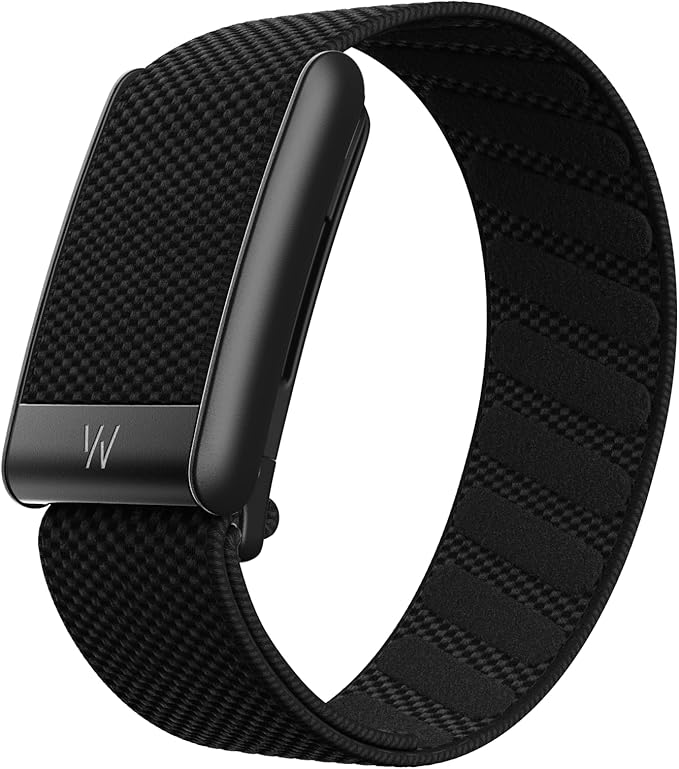
WHOOP 5.0/MG Activity Tracker with 12-Month Membership
The WHOOP 5.0 MG is the wearable most often recommended alongside the Withings mat by AFib-focused communities in 2026, because the MG variant adds an on-demand ECG and an irregular-heart-rhythm notification system that runs continuously, not only at night. Resting heart rate, HRV (RMSSD), and respiratory rate are all logged minute-by-minute, which is exactly the kind of data an electrophysiologist asks for when titrating beta-blockers or evaluating ablation outcomes. The strap is screenless, so it does not light up in a dark bedroom, and the bicep band option is helpful for patients who develop wrist contact rashes from longer-term wear. Membership includes the journaling tools you need to correlate alcohol, caffeine, and late meals with AFib triggers.
Check the WHOOP 5.0/MG with 12-Month Membership on Amazon
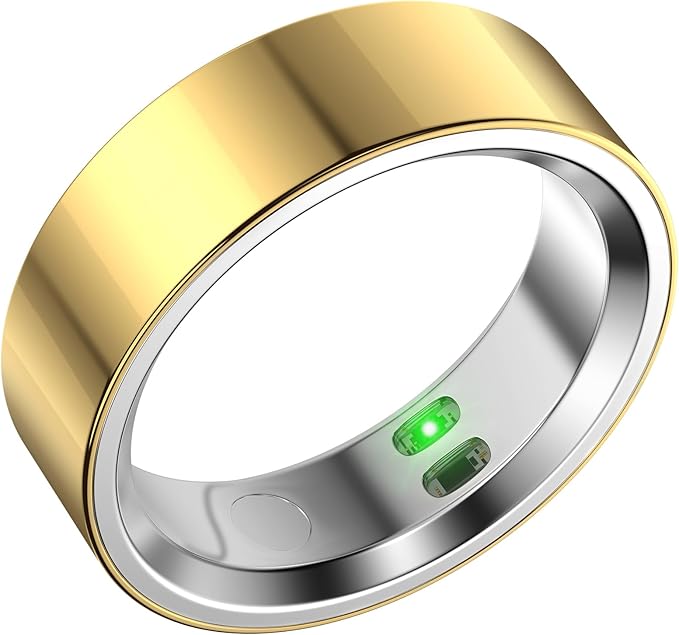
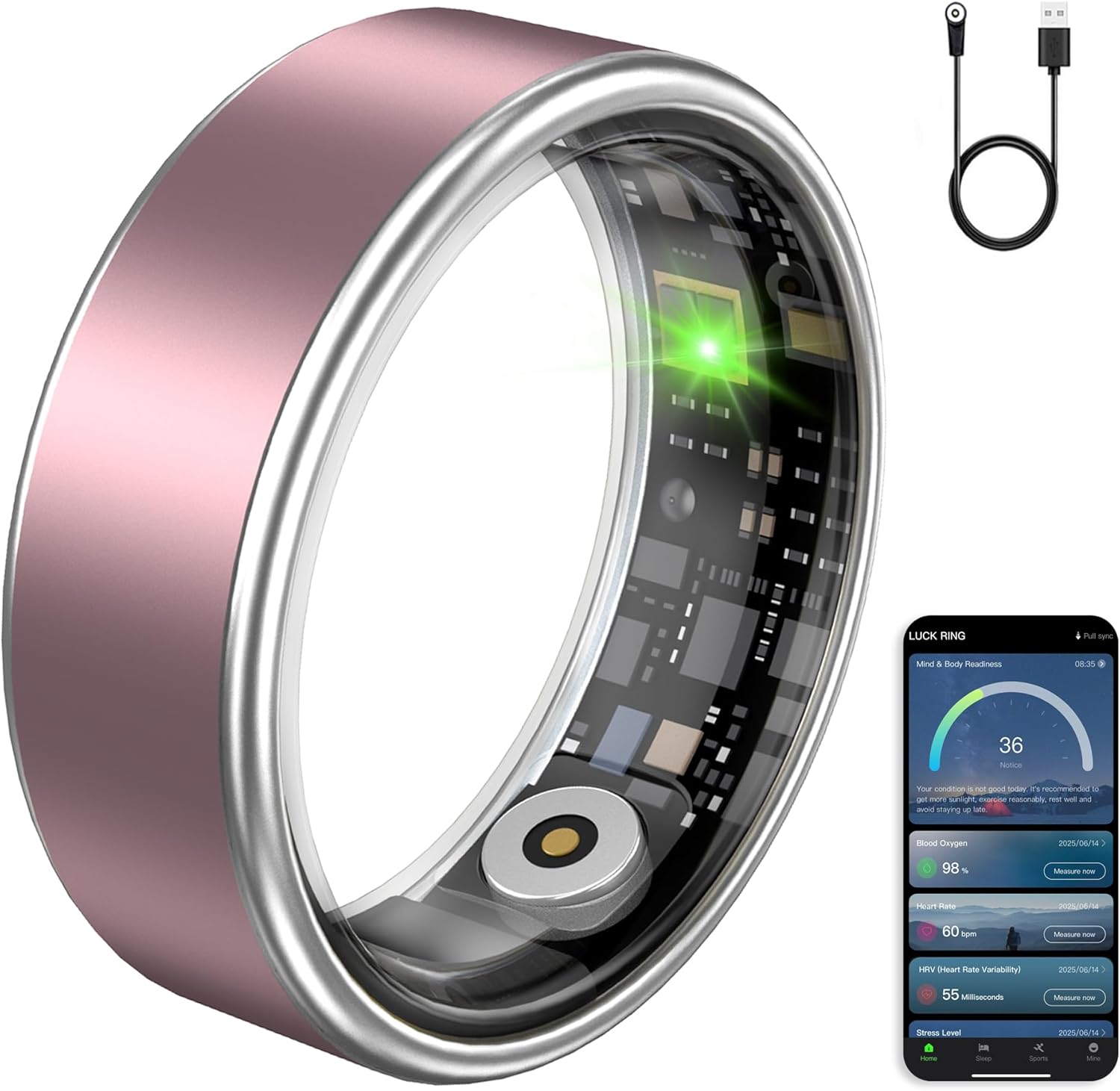
RQZ Smart Ring with Heart Rate & Sleep Tracking
For AFib patients who cannot tolerate anything on the wrist — and there are many, because tachycardia plus a tight band can feel claustrophobic during an episode — a ring is often the answer. The RQZ Smart Ring captures continuous photoplethysmography from the finger, where signal quality is typically higher than at the wrist, and logs nightly resting heart rate, HRV trends, and sleep stages. It will not deliver an FDA-cleared AFib alert, but the heart-rate variability and resting-HR graphs pair cleanly with the Withings mat’s nightly summary, giving you two independent readings of the same metric.
See the RQZ Smart Ring on Amazon
![Apple Watch Series 11 [GPS 42mm] Smartwatch with Rose Gold Aluminum Case with Light Blush Sport Band - S/M. Sleep Score, F...](https://sleeptrackerhq.com/aimg/images/I/6110Jv9wqeL._AC_SL1500_.jpg)
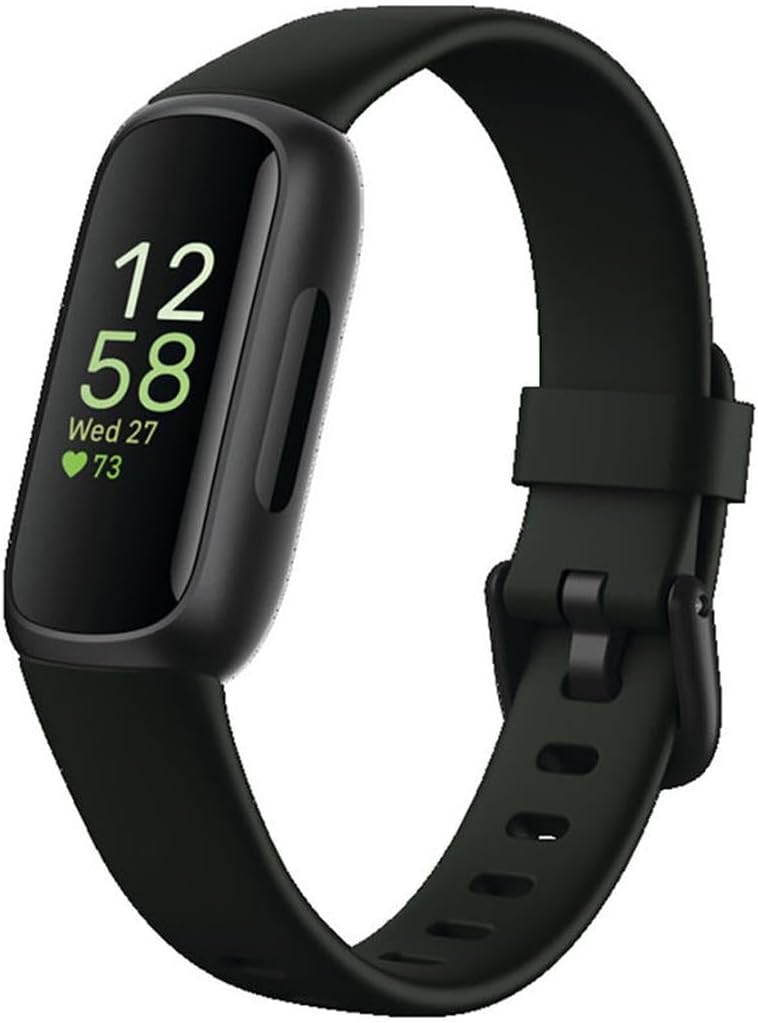
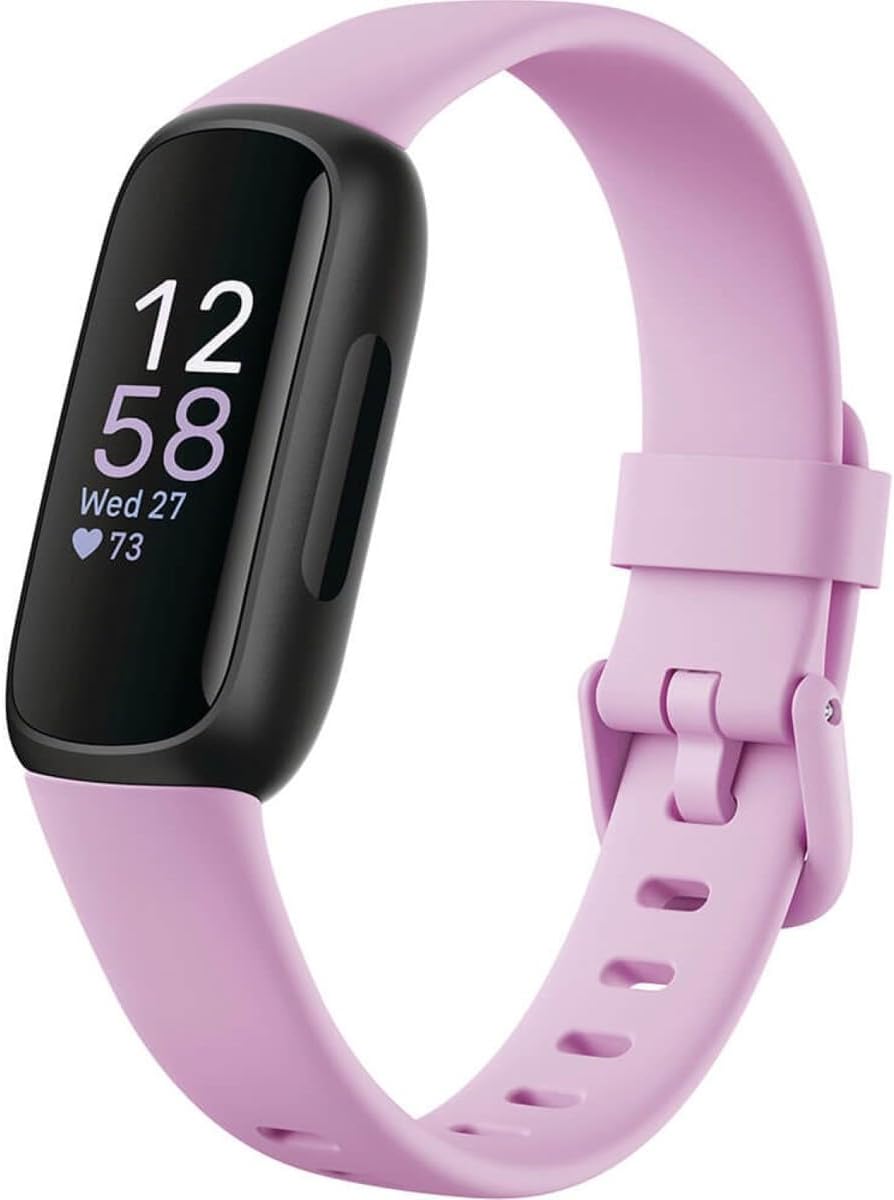
Fitbit Inspire 3 Health & Fitness Tracker
The Inspire 3 is the budget anchor of this list. For an AFib patient who already owns the Withings mat and simply wants a daytime resting-heart-rate readout, the Inspire 3 delivers continuous HR, sleep stages, SpO2 trends, and a 10-day battery — all without the subscription required by some competitors. It will not run an ECG, but the heart-rate alerts (high and low thresholds) are useful for spotting symptomatic episodes when you are out and about. The slim band is comfortable enough to wear to bed if you ever travel without the Sleep Mat.
![Apple Watch Series 11 [GPS 46mm] Smartwatch with Silver Aluminum Case with Purple Fog Sport Band - M/L. Sleep Score, Fitne...](https://sleeptrackerhq.com/aimg/images/I/71P1DHbS0KL._AC_SL1500_.jpg)
View the Fitbit Inspire 3 on Amazon
Google Fitbit Air Screenless Activity & Sleep Tracker
The Fitbit Air is the newest screenless option in the Fitbit line and was clearly designed for sleep-first users. With no display to light up at 3 a.m., it is the wrist-worn option closest in spirit to the Withings mat — passive, quiet, and focused on long-horizon trends rather than real-time notifications. For AFib patients who do not want a smartwatch buzzing during an episode, the Air is an underrated choice. It tracks nightly resting heart rate and sleep stages, which makes the daytime data you can show your cardiologist much more complete.
Check the Fitbit Air on Amazon
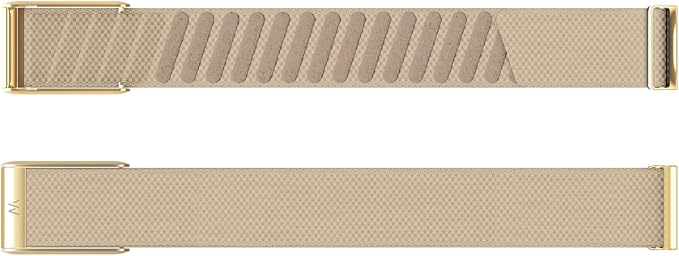
WHOOP 5.0/MG SuperKnit Luxe Performance Accessory
If you settle on the WHOOP 5.0 MG as your daytime companion, the SuperKnit Luxe is the band most AFib users gravitate toward because it is softer against skin that is often sensitized by long-term anticoagulant use. Easy-bruising patients on apixaban or rivaroxaban report fewer pressure marks with this weave, and the quick-release clasp makes it simple to swap off before a shower without yanking on the wrist.
See the WHOOP SuperKnit Luxe band on Amazon
How to set up the Withings Sleep Mat for AFib patients tracking nocturnal arrhythmia
Setup is where most readers run into trouble, because the irregular-rhythm feature is region-locked and must be activated in the Health Mate app. Place the mat horizontally under the mattress at chest level — not at the hips, which is a common mistake that ruins ballistocardiography signal quality. Connect it to 2.4 GHz Wi-Fi (the mat does not support 5 GHz), then in Health Mate open Devices → Sleep Analyzer → Health Tracking and enable both Breathing Disturbances and Irregular Heart Rhythm Notifications. The first reliable AFib-screening reading typically appears after seven consecutive nights, because the mat needs to baseline your normal rhythm before it will flag deviations.
For partners who share a bed, place a second mat on the other side; the device is sensitive enough that overlap can confuse the classifier. If you sleep on a memory-foam mattress thicker than 16 inches, Withings recommends placing the mat between the mattress and the foundation rather than between the mattress and a topper, because excess foam dampens the ballistocardiogram. Patients with significant tremor or restless leg syndrome may see false positives — keep a brief symptom diary for the first month so your cardiologist can interpret the mat’s flagged nights in context.
Sharing Withings data with your cardiologist
Health Mate can export a PDF that covers up to 90 days of overnight heart rate, sleep stages, AHI (apnea-hypopnea index), and any nights flagged for suspected AFib. Most US electrophysiology clinics in 2026 accept this PDF via patient-portal upload. Pair it with the rhythm strips from your WHOOP or, if you have one, an Apple Watch or KardiaMobile, and you have given your care team the clearest possible picture of nocturnal arrhythmia burden without a multi-week Holter rental. If you are post-ablation, this combination is also useful for tracking the three-month blanking period.
For background reading on related sleep-wellness setups, see our guides on the best under-mattress sleep trackers of 2026, sleep apnea detection without a CPAP trial, and heart-rate variability trackers for cardiac patients.
Frequently Asked Questions
Can the Withings Sleep Mat diagnose AFib on its own?
No. The Withings Sleep Analyzer is a screening device, not a diagnostic one. Its irregular-heart-rhythm notification flags patterns consistent with AFib but cannot replace a 12-lead ECG, Holter monitor, or implantable loop recorder. Use it to alert you and your cardiologist that something deserves a closer look, then confirm with a clinical ECG before treatment decisions are made.
How accurate is Withings ballistocardiography for detecting nocturnal AFib episodes?
Peer-reviewed validation studies from 2020 through 2024 showed sensitivity in the high 80s to low 90s percent and specificity above 95 percent against simultaneous polysomnography ECG in adult populations without pacemakers. Accuracy drops in patients with frequent ectopy, severe obesity, or coexisting restless leg syndrome, where the mechanical signal is noisier.
Does the Withings mat work if I take beta-blockers or am rate-controlled?
Yes. Rate-control medications lower the ventricular response but do not eliminate the irregularly irregular pattern of AFib, which is what the classifier looks for. Many rate-controlled patients actually get cleaner mat readings because the absence of tachycardia gives the ballistocardiogram a stronger waveform to analyze.
What is the best wearable to pair with the Withings Sleep Mat for AFib?
For 2026, the WHOOP 5.0 MG with on-demand ECG is the most data-rich pairing, while the RQZ Smart Ring is the most comfortable option for patients who cannot tolerate wrist sensors. The Fitbit Inspire 3 is the most affordable companion and the Fitbit Air is the quietest at bedtime.
Will the mat detect sleep apnea, which is a known AFib trigger?
Yes — that is one of its strongest features. The Sleep Analyzer reports an estimated apnea-hypopnea index nightly and categorizes severity. Because untreated OSA can double the risk of AFib recurrence after ablation, this is arguably the most important non-rhythm metric the mat provides.
Can two AFib patients share one mat if they sleep in the same bed?
No. A single mat tracks the side of the bed it is under, and rolling movement from a partner can degrade the signal. For couples where both partners want data, Withings supports two mats per Health Mate household with independent profiles.
Does Withings share my nocturnal arrhythmia data with insurance companies?
Withings policy as of 2026 is that personal health data is not shared with third parties without explicit consent. You control whether to export the PDF and to whom you send it. Always review the current Withings privacy policy before activating cloud sync if you have specific insurance or employer concerns.
Key Takeaways
- Choosing the right withings sleep mat for afib patients tracking nocturnal arrhythmia means matching capacity and output ports to your actual devices
- Always check actual watt-hours (Wh), not just watts — runtime depends on Wh, not peak output
- Also covers: withings sleep mat afib monitoring
- Also covers: non-wearable atrial fibrillation tracker
- Also covers: withings mat heart arrhythmia detection
- Compare price-per-Wh across models to find the best value for your budget