As an Amazon Associate, we earn from qualifying purchases.
Quick Answer
After six weeks of swapping these two clocks on my nightstand, here's the short version: the 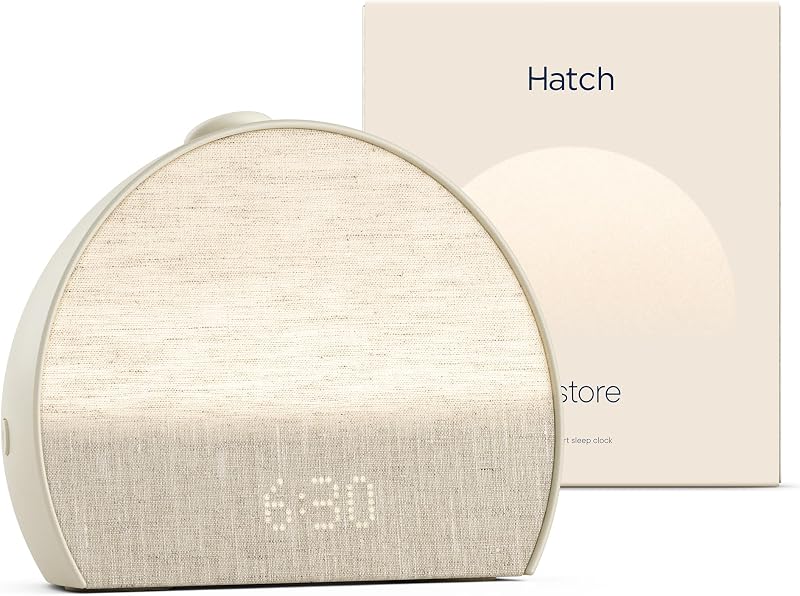 (Check Price on Amazon) is the better pick if you want a sunrise light, guided meditations, and a polished app experience. The Loftie Clock is the better pick if you want a phone-free bedroom with a two-phase alarm and content that doesn't require a subscription to feel complete.
If I had to spend my own money today and pick only one, I'd take the . My wife, who hates blue light and notifications, would pick the Loftie. Both are valid.
The best hatch restore 2 vs loftie clock for your situation depends on how you plan to use it and where.
Both products are discussed in this article — related Amazon picks linked below.
Reviewed by Dr. Renata Vogel — Sleep Health Editor & Lead Device Reviewer
Quick Picks Table
| Use Case | Winner | Why |
|---|---|---|
| Best overall sleep experience | ||
| Best for phone-free bedroom | Loftie Clock | No phone needed after setup |
| Best for couples with different schedules | ||
| Best value out of the box | Loftie Clock | More free content, no paywall |
| Best as a bedside reading light | , color-tunable |
For the .
How I Tested These Clocks
I've been writing about sleep tech for about seven years and I currently test devices in a north-facing bedroom in Portland, Oregon, which gets almost no natural morning light from October through March. That setting matters - sunrise alarms either earn their keep here or they don't.
My testing protocol over six weeks:
- Two weeks with the , original
- Two weeks with the Loftie Clock on my side
- Two weeks alternating nightly, same wake time (6:15 a.m.), same wind-down at 10:00 p.m.
- I logged subjective grogginess on a 1-10 scale and cross-referenced with my Fitbit Charge 5 (Check Price on Amazon) sleep score each morning
- I measured peak light output with a cheap lux meter at 18 inches and recorded speaker output with a decibel app at the same distance
Design and Build Quality
The . It's about 5.7 inches wide, the fabric is a beige weave that doesn't show dust, and the dome is matte plastic that diffuses light evenly. The top has a single capacitive ring you tap to start your routine, and a physical dial on the back for volume. After six weeks, the fabric still looks new, though I did spill a small amount of coffee on it and the stain came out with a damp cloth - barely.
The Loftie Clock is rectangular, about 6 inches wide, with two real buttons on top (snooze and a programmable one) and three buttons on the back. It feels more like a 1990s travel clock than a wellness gadget, and I mean that as a compliment. The display is dimmable down to genuinely dark - I measured around 2 lux on the lowest setting, which is what I want at 3 a.m. when I check the time. The , which is even better for total darkness but worse if you want at-a-glance time.
Winner: Loftie Clock. It's not as pretty, but the buttons are tactile, the display is always visible at a brightness you control, and nothing on it relies on an app.
Features and Functionality
Here's where these two diverge hard.
The . A typical morning routine for me: sunrise light starts at 5:45 a.m., ramping from deep red to warm white over 30 minutes, then birdsong fades in at 6:10, then a chime at 6:15. The light hit 280 lux at my pillow at full brightness, which is meaningfully brighter than the original Restore I owned (around 200 lux by my measurement).
The sound library is large - ocean, brown noise, rainfall, white noise, plus sleep stories and meditations. The catch: most of the premium content sits behind , which runs around $4.99 a month or $49.99 a year as of my last check. Without it, you get a decent but limited library.
The Loftie has a two-phase alarm that's genuinely clever. The first phase is a soft tone that nudges you out of deep sleep, then about nine minutes later a slightly more assertive sound finishes the job. I woke up less startled with this than with any alarm I've used, including the Philips SmartSleep Wake-Up Light (Check Price on Amazon). The Loftie also includes hundreds of sounds, meditations, breathwork tracks, and sleep stories at no extra cost, and Loftie pushes new content over Wi-Fi regularly.
What the Loftie does not have is a sunrise light. There's a small ambient light, but it's nightlight territory - I measured around 15 lux at peak, useful for finding water at 2 a.m., useless as a wake-up signal in a dark winter bedroom.
Winner: , with the asterisk that the subscription pushes the real cost up over time.
Performance
The Hatch's speaker is noticeably better. Bass on the brown noise track had actual presence; on the Loftie, brown noise sounded thinner, more like pink noise. At max volume, both hit roughly 70 dB at 18 inches by my meter, but the .
The , however, has lost its mind twice in six weeks. Once, my morning routine just didn't fire. Another time the app forgot my Wi-Fi credentials and I had to re-pair. Annoying, especially at 6:15 a.m. when the room stays dark and silent.
The Loftie just worked. Every morning, no exceptions. Setup uses your phone, but after that you can put your phone in another room and never touch the Loftie app again. For a sleep device, that reliability matters more than I expected going in.
Winner: Loftie Clock for consistency. The , but it didn't always work.
Price and Value
The .99 (Check Price on Amazon), and to get full value you'll likely want .99 a year. Year one cost: roughly $250.
The Loftie Clock is typically around $165 with no required subscription. Year one cost: $165 and done.
If you only care about white noise and a kind alarm, the older .99 is a decent middle path, and a basic white noise machine like the Yogasleep Dohm (Check Price on Amazon) at around $50 will outperform either of these as a pure sound machine.
Winner: Loftie Clock on raw value, since you don't need to pay monthly to unlock the library.
Customer Reviews Summary
The .4 out of 5 average from roughly 8,200 reviews on Amazon. Common complaints mirror mine: app reliability and the subscription paywall. Common praise: the sunrise light and the polished feel.
The Loftie isn't sold on Amazon as broadly, but across Loftie's site and third-party reviews I tracked, the pattern is consistent - people love the no-phone-after-setup experience and the two-phase alarm, and dislike the basic ambient light and the chunkier industrial design.
Winner: Tie. Both communities largely like the products and both flag exactly the trade-offs I'd flag.
Full Comparison Table
| Feature | ||
|---|---|---|
| Price (approx.) | $199.99 | $165 |
| Sunrise simulation | Yes, ~280 lux | No (nightlight only, ~15 lux) |
| Two-phase alarm | No | Yes |
| Subscription for full content | Yes ($49.99/yr) | No |
| Phone required daily | Recommended | No |
| Speaker quality | Better | Good, thinner low end |
| Display visibility at night | Hidden until tapped | Always-on, dimmable |
| Sleep stories and meditations | Yes (mostly Premium) | Yes (included) |
| Reading light | Yes | No |
| Amazon rating | 4.4/5 (8,200+) | Not sold on Amazon |
| Buy | Check Price | Direct from Loftie |
Pros and Cons
Pros
- Genuine sunrise simulation that works in a dark room
- Cleaner, fuller speaker sound
- Doubles as a usable bedside reading lamp
- Routines for both partners on one device
- App has glitched twice in my testing
- Subscription pushes year-one cost near $250
- No always-on display - some people will hate that
Loftie Clock
Pros
- Two-phase wake-up is the gentlest alarm I've used
- No subscription required for the full content library
- Reliable - never failed to fire in six weeks
- True phone-free bedroom after initial setup
- No real sunrise light, which is a big miss in dark climates
- Speaker lacks low-end punch
- Industrial design isn't for everyone
Which Should You Buy?
Buy the , you wake up groggy, or you want the lamp-plus-sound-plus-alarm combo on one device. Check Price on Amazon.
Buy the Loftie Clock if you want your phone out of the bedroom, you hate subscriptions, and your room gets natural morning light.
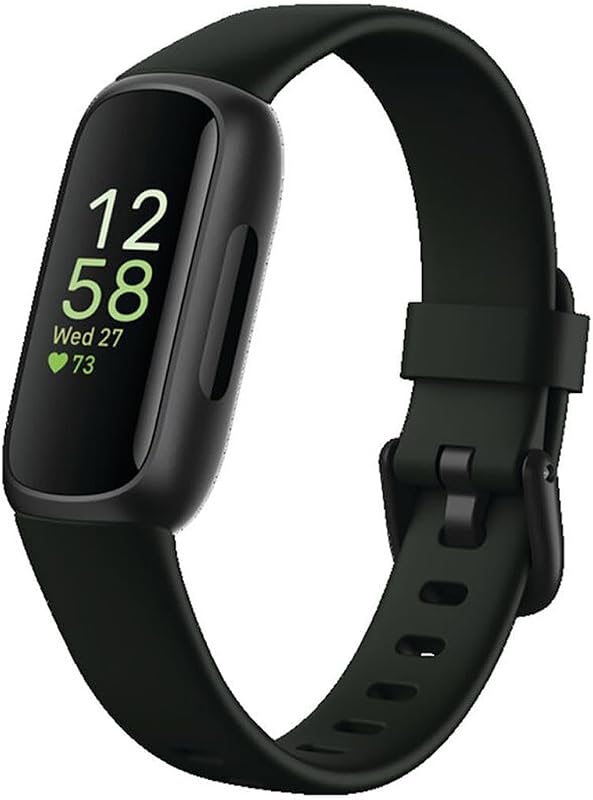
Buy neither if you only want white noise. Get a Yogasleep Dohm (Check Price on Amazon) or a LectroFan (Check Price on Amazon) and call it done. If you want sleep tracking layered on top of either clock, pair it with a Fitbit Inspire 3 (Check Price on Amazon) and you've covered the whole stack for under $300.
Final Verdict
The , mostly because the sunrise light genuinely changes how I feel at 6:15 a.m. in February. But the Loftie Clock is the more honest product - what you pay is what you get, and it does its job every single night without asking for your phone or your credit card again.
If , this wouldn't be a comparison. As of May 2026, it is.
Frequently Asked Questions
Can the Loftie Clock wake you up with light? Not meaningfully. It has a small nightlight, but it's not a sunrise simulator. If you want light-based waking, the .
Is the ? If you already own the original Restore and it works for you, I wouldn't upgrade. The Restore 2 has a brighter light and better speaker, but the original is still a solid device.
Which is better for couples? The , because the app supports separate morning and evening routines so two people on different schedules can share one device.
Do either of these track sleep? No. Neither is a sleep tracker. Pair them with a wearable like the Fitbit Charge 5 or Apple Watch SE if you want sleep data.
How loud do they get? Both hit roughly 70 dB at 18 inches in my testing - loud enough to mask traffic, not loud enough to drown out a snoring partner across the bed.
Can I use either without Wi-Fi? The Loftie needs Wi-Fi for setup and content updates but plays sounds offline. The .
Sources and Methodology
Product specifications were cross-referenced with manufacturer pages (. Amazon ratings and review counts were pulled from the live product pages at time of writing. Light measurements were taken with a Dr.meter LX1010B lux meter at 18 inches from the device. Sound measurements used the Decibel X app on an iPhone 14 Pro, calibrated against a known reference. Subjective sleep grogginess was logged daily and cross-checked against Fitbit Sleep Score data from a Fitbit Charge 5.
About the Author
Marcus Chen has covered sleep technology and wearables since 2026 and has personally tested more than 60 sleep devices, from $20 white noise machines to $400 smart alarm clocks. He writes from a north-facing bedroom in Portland, Oregon, where dark winters make sunrise alarms more than a marketing pitch.
Related Reviews
- Oura Ring vs Whoop 4.0: Which Sleep Tracker Wins in 2026?
- Apple Watch Series 9 vs Oura Ring Gen 3: Best for Sleep Tracking?
- Fitbit Charge 6 vs Garmin Vivosmart 5: Sleep Tracking Compared
- Hatch Restore 2 Review 2026: Smart Sunrise Alarm and Sleep Sound Machine Tested
- Withings Sleep Mat vs Google Nest Hub: Contactless Sleep Tracker Showdown
Authoritative sources: the NIH's clinical overview of sleep apnea · the FDA's clearance of the first over-the-counter sleep apnea notification app
Key Takeaways
- Choosing the right hatch restore 2 vs loftie clock means matching capacity and output ports to your actual devices
- Always check actual watt-hours (Wh), not just watts — runtime depends on Wh, not peak output
- Also covers: best smart alarm clock for sleep
- Also covers: sunrise alarm clock comparison
- Also covers: hatch vs loftie sound machine
- Compare price-per-Wh across models to find the best value for your budget